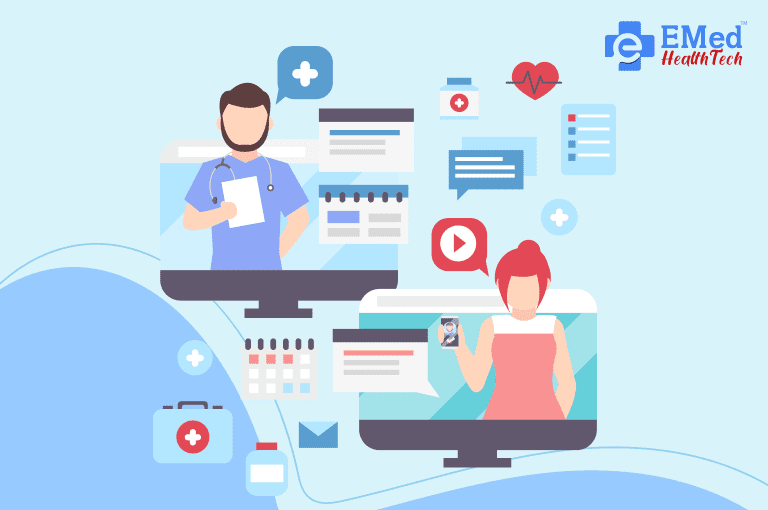
The world of healthcare is evolving every day. A vital component of delivering high-quality care is patient engagement. With patients desiring greater involvement in their healthcare decisions and outcomes, healthcare providers recognize the importance of empowering patients and fostering a collaborative approach to care. This is where patient engagement software comes into play.
Patient engagement software has evolved over the years, offering a range of tools and resources that facilitate active patient participation in their care journey. These software solutions transform healthcare delivery and improve patient outcomes, from patient portals and mobile health applications to remote monitoring systems and wearables.
This article delves into the evolution and transformative impact of patient engagement software in healthcare. Let’s explore how patient engagement software is revolutionizing the healthcare landscape and paving the way for a patient-centric approach to care.
How Patient Engagement Software is Transforming Healthcare
This section explores the key ways patient engagement software drives positive change in healthcare:
Increased patient satisfaction and outcomes
Patient engagement software empowers patients to actively participate in healthcare decisions actively, increasing patient satisfaction. Patients can access their health records, appointment scheduling, and secure messaging with healthcare providers through patient portals and mobile health applications. This enhanced access and communication foster a sense of involvement and control, leading to improved patient satisfaction.
Patient engagement software facilitates shared decision-making between patients and providers, ensuring treatment plans align with patient preferences and goals. Here is how healthcare IT solutions and services can help to improve patient care.
Improved patient-provider communication
Effective communication between patients and healthcare providers is essential for delivering high-quality care. Patient engagement software streamlines and strengthens this communication process. Secure messaging features allow patients to ask questions, seek clarifications, and share updates with their healthcare providers conveniently and timely.
Telehealth capabilities integrated into patient engagement software enable virtual consultations, reducing the need for in-person visits and facilitating ongoing communication between patients and providers.
Enhanced patient education and self-management
Patient engagement software empowers patients with valuable health information and educational resources. Patients can access educational materials, instructional videos, and personalized health recommendations through patient portals and mobile applications. This promotes health literacy and empowers patients to make informed decisions about their care.
Reduced healthcare costs and readmissions
Patient engagement software can potentially reduce healthcare costs by promoting preventive care, early intervention, and chronic disease management. With remote monitoring systems and wearable devices, patients can track their health indicators and share real-time data with healthcare providers. This enables proactive interventions, preventing the progression of conditions and reducing the likelihood of costly hospitalizations.
Patient engagement software supports efficient care transitions and care coordination, reducing the risk of hospital readmissions.
6 Types of Patient Engagement Systems
Patient engagement software encompasses many systems and tools designed to enhance patient involvement and improve healthcare outcomes. In this section, we will explore several types of patient engagement systems revolutionizing healthcare delivery.
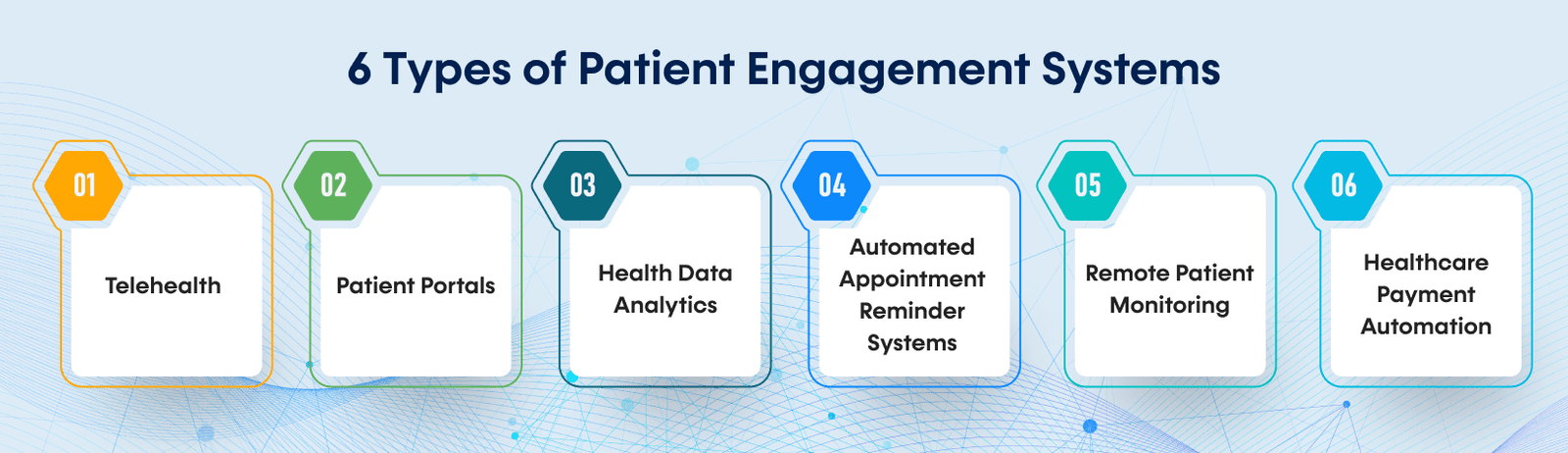
1. Telehealth
Telehealth and Telemedicine software has gained significant prominence recently, especially with the global pandemic necessitating remote healthcare services. This technology allows patients to receive medical consultations, diagnoses, and treatment remotely, using video conferencing and other communication tools. By eliminating geographical barriers, telehealth improves patient access to healthcare services, particularly for those in remote areas or with limited mobility.
2. Patient Portals
Patient portals allow patients to access their medical records and request refills on prescriptions, book appointments, request refills, and connect with their doctors and health care professionals. Patients can play an active role in their health management by giving them easy access to their medical data and helping them to be in immediate contact with their healthcare team.
3. Health Data Analytics
Health data analytics systems analyze patient data to derive valuable insights and support evidence-based decision-making. These systems collect and analyze data from various sources, such as electronic health records (EHRs), wearable devices, and patient-reported outcomes. By identifying patterns, trends, and risk factors, health data analytics systems enable healthcare providers to personalize treatment plans, identify high-risk patients, and optimize care delivery.
4. Automated Appointment Reminder Systems
Missed appointments can disrupt patient care and result in inefficiencies for healthcare providers. Automated appointment reminders use a variety of methods of communication, including text, email, or phone calls, to remind patients about their upcoming appointments. These systems help reduce no-show rates and improve appointment adherence, ensuring that patients receive timely care and that providers can effectively manage their schedules.
5. Remote Patient Monitoring
Remote patient monitoring involves using connected devices and wearables to collect and transmit real-time patient health data to healthcare providers. This technology allows continuous monitoring of patients’ vital signs, medication adherence, and symptoms from the comfort of their homes. Healthcare providers can remotely track patients’ health status, detect early warning signs, and intervene promptly, leading to proactive and personalized care management.
6. Healthcare Payment Automation
Healthcare payment automation systems streamline and simplify patients’ billing and payment processes. These systems provide patients with online payment options, automated payment reminders, and the ability to review and manage their healthcare expenses. Healthcare payment automation systems improve patient satisfaction and financial transparency by removing barriers and friction from the payment process.
Innovative Technologies That Enhance Patient Engagement Solutions
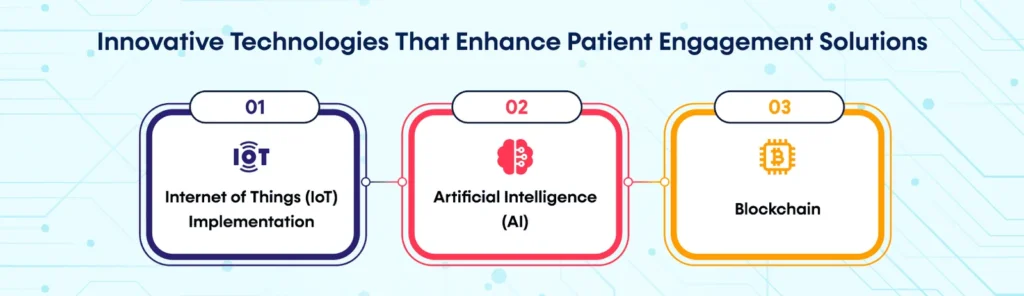
Patient engagement solutions are continually evolving by integrating innovative technologies that enhance the patient experience and improve healthcare outcomes. In this section, we will explore three technologies disrupting patient engagement: the Internet of Things (IoT), Artificial Intelligence (AI), and Blockchain.
Internet of Things (IoT) Implementation
IoT devices, which include wearable devices and connectable sensors, can be used to remotely monitor patients’ vital signs, sleep patterns, physical activity, and medication adherence.
This data can be seamlessly transmitted to healthcare providers, allowing for proactive interventions, early detection of health issues, and personalized care plans.
IoT technology empowers patients to actively participate in their healthcare journey by giving them insights into their health status and enabling self-management.
Artificial Intelligence (AI)
Artificial Intelligence has tremendous potential in patient engagement solutions. AI algorithms can analyze large volumes of patient data, identify patterns, and generate insights that aid diagnosis, treatment planning, and personalized care recommendations. AI-powered chatbots and virtual assistants can interact with patients, provide information, answer questions, and offer support. AI also plays a vital role in predictive analytics, allowing healthcare providers to identify individuals at risk of developing specific conditions and intervene early to prevent adverse outcomes.
Blockchain
Blockchain technology has the potential to transform patient engagement by ensuring the secure and transparent sharing of health information. Blockchain’s decentralized and immutable nature gives patients greater control over their health data, allowing them to access and share their records with healthcare providers securely. Blockchain-based smart contracts can automate consent management and facilitate seamless data exchange between healthcare entities, improving care coordination and patient outcomes.
By leveraging these innovative technologies, patient engagement solutions are becoming more personalized, efficient, and effective.
Summing Up
Patient engagement software plays a significant role in the evolution and transformation of healthcare. As technology advances, patient engagement solutions are becoming more sophisticated, personalized, and effective. The integration of these solutions has the potential to revolutionize the healthcare industry, leading to improved patient outcomes, enhanced communication, and reduced costs.
If you’re looking for reliable patient engagement software solutions tailored to your needs, we, at EMed HealthTech, can help. As a leading custom healthcare software development company, we have a proven track record in developing innovative and user-friendly healthcare software that enhances patient engagement and improves healthcare delivery. Ready to take the next step in transforming your healthcare organization? Contact us today!